Silent Planet takes its name from C.S. Lewis’s Out of the Silent Planet, in which Earth is the one world cut off from the voices of the heavens. But the Southern California band built its following by listening, absorbing, pondering, and translating. Frontman Garrett Russell’s lyric sheets come with footnotes, threading T.S. Eliot, Dostoevsky, Kierkegaard, Dante, Frantz Fanon, and mythology through songs that give voice to real people: a survivor of the Oradour-sur-Glane massacre, the hibakusha of Hiroshima, a stranger lost in his own delusions at Penn Station. This music is equally adept at broad appeal through rhythm, melody, and noise, burning with deeper meaning beneath.
That depth built one of heavy music’s most devoted followings. Russell calls them Lovers. Since their 2009 formation, Silent Planet earned their affection one show and one story at a time, across countless tours (with contemporaries like Motionless In White, Dayseeker, and Beartooth), festivals, and a half dozen full-length albums of increasing urgency and vibe, minting new Lovers all the time.
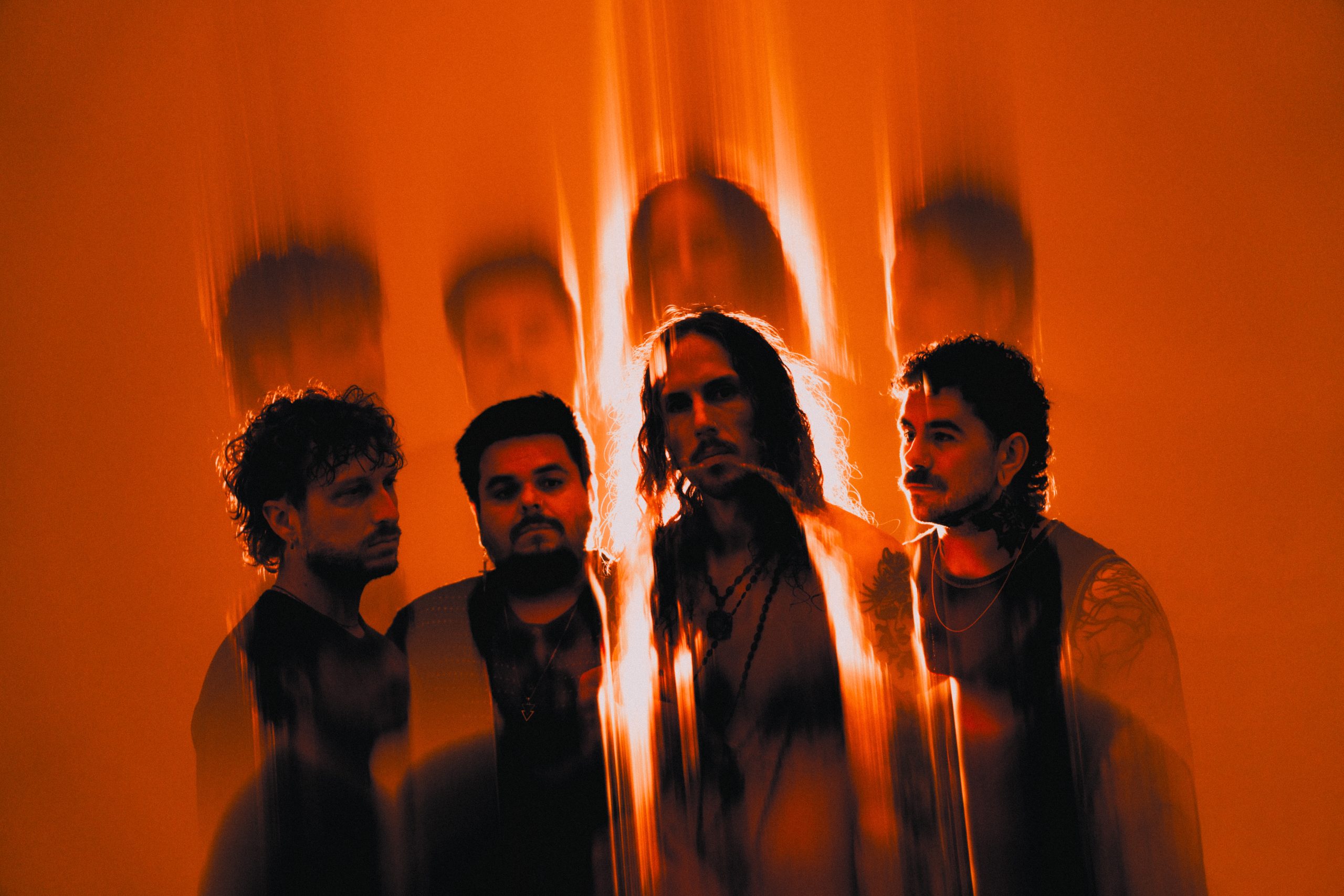
Russell, drummer Alex Camarena (since 2012), guitarist and vocalist Mitchell Stark (since 2014), and bassist Nick Pocock (since 2022) are set to enter 2027 with their most definitive masterwork yet.
Infinite Sleep, the band’s sixth full-length and its first with powerhouse indie Pure Noise Records, is the most ambitious chapter so far: a conceptually driven, thematically heavy album about the technology threatening to swallow the world whole, even as birds sound the alarms with their song.
“It’s all one large serpent, one large antichrist, that we are summoning,” Russell warns.
A former therapist with a master’s degree in psychology, he writes like someone who listens for a living. That empathy, and songs equally fluent in bludgeoning heaviness and widescreen beauty, set Silent Planet apart early. Everything Was Sound (2016) debuted at No. 1 on Billboard’s Hard Rock Albums chart, and a year later the band won Best Underground Band at the Alternative Press Music Awards, an underdog victory that told the industry what the fans already knew. By When the End Began (2018), Alternative Press placed Silent Planet at “a spot seemingly unchallenged by any other artist,” a band “purposefully lighting the way in a world predisposed to destruction.”
Silent Planet nearly faced its own destruction just a few years later. In November 2022, their van flipped in a Wyoming snowstorm, hospitalizing their singer with a concussion and fractured back.
SUPERBLOOM (2023), the sci-fi concept album written in the wake of the crash, became a career high point. “Antimatter” racked up 35 million streams on Spotify alone. The Aquarian called the album “a masterpiece of modern metal.” Kerrang! demanded, “Give these lads their flowers.”
“Wick” raised funds for the Ukrainian children’s charity Return of Childhood. In June 2026, Silent Planet played Kyiv and Lviv, the first American band to perform in Ukraine since Russia’s full-scale invasion in 2022. “We had the privilege of being the first American band to play Ukraine in five years,” Garrett says. “That whole experience definitely shook me up a lot.”
Every Silent Planet album tells a story, and Infinite Sleep picks up where SUPERBLOOM left off. The crash shook Garrett’s sense of what was real. Two years making the new record shook it again.
One night, Garrett became convinced that a bird was speaking to him. Not long after, a fan who had survived an accidental overdose and weeks in a coma told him that birds had spoken to him, too, and handed him a copy of The Conference of the Birds, the centuries-old masterwork by Sufi poet Attar.
“In that book, he claims that birds are speaking the language of heaven, that they’re kind of like angels or harbingers, messengers,” Garrett says. “I became convinced that their language is changing and evolving to try to wake humans up, because we’re falling into a trance of technology that’s leading to our destruction.”
Roko’s Basilisk (the thought experiment about a future AI that punishes anyone who failed to help create it), nightmares of a serpent burrowing into his mind, and a close call with a rattlesnake on a hike in Los Angeles completed the picture.
“That was when I was realizing that the things you focus on kind of come to life,” he says. “That’s where the album concept was born. We’re building hell with the technology that we’ve become so dependent on.”
Across 14 songs, Infinite Sleep takes the beast apart, from opener “Basilisk” through “fangs!!” and “Snakepit,” while “A Swarm of Starlings,” “Mourning Dove, Why Don’t You Sing,” and “Lucid Wings of…” evoke the feathered friends. It’s something of a modern take on Genesis, complete with songs about a garden, a flood, and Cain and Abel. “I think we’re witnessing what happens when humans try to create a god,” he marvels, “and what the created god will do to its creator.”
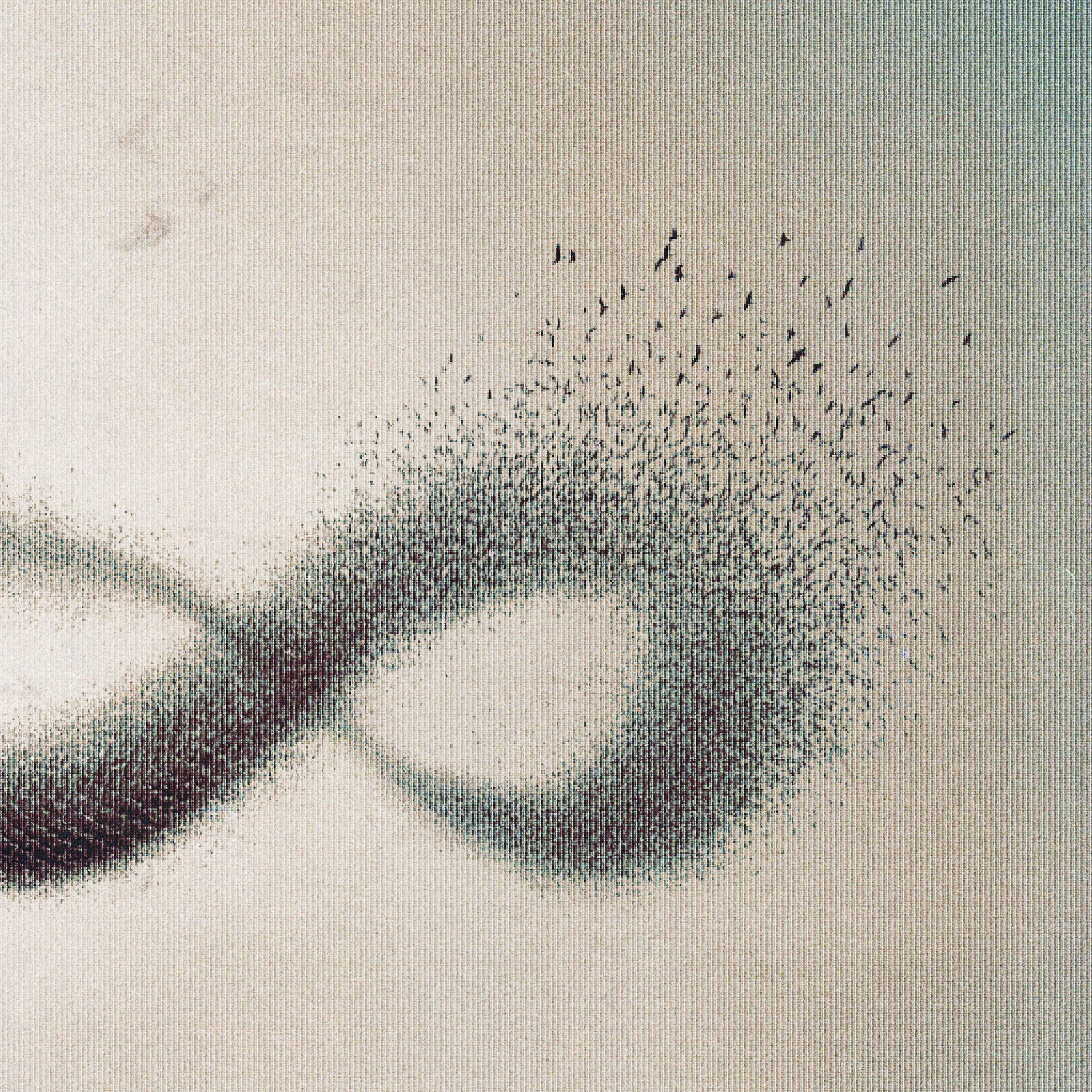
The murmuration of starlings moving as one on the album’s cover makes the case for community. Infinite Sleep is a prayer that humanity can awaken and untether itself from tech before it’s too late.
Musically, Russell calls Infinite Sleep “the most complete Silent Planet album.”
The record fuses together each potent era of the band. Original guitarist Spencer Keene, a driving creative force on The Night God Slept (2014) and Everything Was Sound (2016), returned as a writer and producer, bringing his signature touch to help Infinite Sleep find its identity within the Silent Planet catalog.
“Earlier Silent Planet was just me and him,” Garrett says. “He was writing songs and I was putting words and vocals to it.”
Garrett, Mitchell Stark, Alex Camarena, and Nick Pocock reunited with producer Dan Braunstein (Spiritbox, Dayseeker, ERRA), with mixing duties handled by Ocean Grove’s Sam Bassal. Powerful, driving, indie rock-adjacent songs sit beside crushing modern metalcore, industrialized nü-metal, and drone-laden cinematic soundscapes.
That range was always the point. Silent Planet outlasts trends by refusing to write for them.
“For us, being true to ourselves isn’t being true to a certain genre,” Russell says. “It’s being true to an ethos of honest storytelling, and making something that’s emotionally cathartic.”
C.S. Lewis called pain God’s “megaphone to rouse a deaf world.” Silent Planet turned their pain, and the doom of this modern age, into a megaphone of their own.
Tour Dates
Contact
Publicity:
US & UK: Becky Kovach
Europe: Denise Pedicillo
AUS: Janine Morcos
Management:Cory Hajde
Booking:Matt Andersen
Latest Release

News & Updates
-

Silent Planet Announces New Album
November 10, 2026Hailing from Asuza, California, atmospheric progressive metalcore powerhouse Silent Planet.